Jimmy reacts to Donald Trump’s State of the Union address, the speech went on for a very long time, Trump’s popularity is at its lowest point of his second term, all of the sitting and standing got VP JD Vance all sexed up, the U.S. Men’s Hockey Team was in attendance after visiting the White House, the U.S. Women’s Hockey Team got a better offer from none other than Flavor Flav, people were betting on what Trump might say tonight, and we get the official Democratic rebuttal to Trump’s speech from none other than California Governor Gavin Newsom (Josh Meyers).
Stephen Colbert delivers his LIVE monologue following President Trump’s record-setting State of the Union address, where the unpopular leader demonized Democrats and touted his policy that kicked millions of Americans off food stamps. Not present at the speech were the gold medal-winning women of Team USA Hockey who declined the president’s invitation and chose instead to celebrate their achievement alongside Flavor Flav in Las Vegas.
Stephen Colbert goes on the record about his interview with Texas State Rep. James Talarico, the FCC’s “equal time” rule, and today’s statement from CBS.
Several major holidays including Lunar New Year, Ramadan and Mardi Gras converged today, Americans are less hopeful than ever, several business leaders and European politicians have been ousted over their ties to Jeffrey Epstein, and Stephen reads some titillating poetry written by California gubernatorial candidate Eric Swalwell.
Trump became the first and only recipient of the “Undisputed Champion of Coal Award,” since Trump likes to put his name on the front of everything we rename the Epstein Files the Trump-Epstein Files, Attorney General Pam Bondi took a turn in the hotseat and was “offended” by a line of questioning, she got into it with Thomas Massie who was a Republican co-sponsor of the bill that got the files released in the first place, Nancy Mace and Lauren Boebert aren’t buying the coverup, Greg Kelly from Newsmax thinks this whole thing is a hoax, the Trump-Epstein files have even rocked the world of dinosaur fossils, and the Brits are cracking down on porn.
A select group from Congress has been given access to the unredacted Epstein files, Trump is trying to distract by attacking Canada and suggesting that China is going to ban ice hockey and The Stanley Cup, Congressman Jamie Raskin reviewed the unredacted files and says that Donald Trump’s name appears more than ONE MILLION times, the CEO of Chuck E. Cheese resigned after his name appeared once in a seemingly innocuous way, Ghislaine Maxwell is angling for a pardon in exchange for her testimony, Secretary of Commerce Howard Lutnick testified today with the Senate Appropriations Committee and ended up answering questions after he seems to have lied about his interactions with Epstein, Dr. Oz is encouraging people to get the measles vaccine after a huge increase in cases, and MAGAs are so swollen and exploding with rage over the Bad Bunny halftime show that they might need to be medicated.
The Seattle Seahawks defeated the New England Patriots to become Super Bowl Champions, we have the Seahawks Coach Mike Macdonald with us at the show tonight, Bad Bunny paid tribute to the Spanish-speaking world with his halftime performance and got a bad review from Donald Trump, the entire MAGA-verse was hopping mad about it, Turning Point USA put on an alternative “All-American” halftime show headlined by Kid Rock which Trump didn’t even watch, Jimmy talks about the current need everyone has to take a side on everything and people complaining that Bad Bunny’s performance was in Spanish, a shirtless individual somehow got loose on the field, Trump reposted a vile and racist video on Truth Social of the Obamas and there will be no accountability for it for anyone, Ghislaine Maxwell made a virtual appearance in front of the House Oversight Committee, JD Vance got booed at the Olympics in Italy, and Guillermo helps translate Bad Bunny’s performance.
The Newest Epstein Files drop featuring: email correspondence from Howard Lutnick, Peter Atilla & Elon Musk and vacationing on Epstein Island, President Trump’s Poop-Gate, and HOW did our panel end up in the Epstein Files?! Senator Adam Schiff and Comedian, Actor & Producer, Hasan Minhaj join Roy, Amber & Michael dive into all this and more!
The opening ceremony for the Olympics are tomorrow, there will be three curling events this year, Trump sat for an Interview with NBC News, he revealed ICE agents might be coming to a city near you, gave his thoughts on a potential third term, offered a somewhat surprising take on Bill Clinton, Mike Johnson spoke about whether or not Trump will answer questions related to Epstein under oath, Trump rambled for 75 minutes at the National Prayer Breakfast, he did everything in his power to not have to pronounce the President of the Congo’s name, he launched his official Trump Rx website, MAGA is upset about Bad Bunny performing at the Super Bowl Halftime show, and Guillermo heads to San Jose to talk to the star players from the New England Patriots and Seattle Seahawks at Super Bowl Opening Night.
President Trump complained about the bad publicity he got after his immigration forces murdered two people in Minneapolis, the United States military has a weapon nicknamed “The Discombobulator,” and there are a surprising number of references to a bran muffin recipe in the Epstein files.
Today is Groundhog Day, the ironically-titled Department of Justice released about half of the Epstein files, there were many disturbing accounts about a lot of famous people including Bill Gates, Steve Bannon, Richard Branson, and Elon Musk is in there too – more than a thousand times, Donald Trump’s name was mentioned 4,896 times, Trump’s Secretary of Commerce Howard Lutnick’s name pops up 138 times, there appears to be an email to Ghislaine Maxwell from Melania, Trump had the audacity to play the old “Jeffrey who?” card pretending they weren’t actually friends, Trump went after Jimmy in a late night Truth Social post criticizing Trevor Noah who hosted the Grammys, Trump is suing the IRS for $10 Billion, he also announced that he’s closing The Trump Kennedy Center for renovations, Melania the movie made $7 million over the weekend, and journalist Don Lemon was arrested on Thursday night for covering an anti-ICE protest at a church in St. Paul.
We heard it over and over on the campaign trail: Donald Trump’s promise of a crackdown on criminals and undocumented immigrants at a scale and breadth this country had never seen before. Immigration and Customs Enforcement, commonly known as ICE, has swept into American cities and is detaining more people than ever before. However, 71 percent of those held in immigrant detention by the end of September did not have criminal convictions, according to the Migration Policy Institute, a think tank focused on immigration. Many law-abiding immigrants who followed the rules in their applications for visas, green cards or asylum are being taken into ICE detention centers. In the Opinion Video above, meet three people who came to America legally, only to find themselves in ICE detention. They followed the rules — but it didn’t matter.
The students of Valley View Elementary, including the schoolmates of Liam Ramos, wrote letters to the ICE agents who have been detaining their friends and families.
A new YouGov poll taken on Saturday, the day of Pretti’s fatal shooting, showed 19 percent of Republicans and 48 percent of American adults across the political spectrum voicing support for abolishing ICE.
That marks a notable shift from when YouGov pollsters asked the same question last June, as Trump was ramping up his immigration crackdown. At that time only 9 percent of Republicans and 27 percent of Americans overall backed abolishing ICE. Support for shuttering the agency has also surged among independents, with 47 percent backing its elimination in the Saturday poll compared to 25 percent in June.
Good and Pretti’s fatal shootings have heightened scrutiny of the aggressive tactics being used by federal immigration agents under Trump’s second Administration. Following Pretti’s killing, several congressional Republicans have joined Democrats in calling for an investigation into the incident.
“I think we can all agree… FuckICE” – Stephen Colbert
The Trump Administration is lying about the killing of Alex Pretti, Pretti’s family wants everyone to know the truth about who he was and what happened to him, and America’s founding document outlines what should be done if the government turns on its citizens.
Jimmy reacts to what is happening in Minneapolis, ICE committing vile, heartless and even criminal acts, the killing of ICU Nurse Alex Pretti, the need for leaders on the right to stand up and show some courage and common sense, Attorney General Pam Bondi sending Governor Tim Walz a request for Minnesota voter rolls in exchange for de-esclation from ICE, Tom Homan being sent to replace Border Patrol Head Greg Bovino in Minneapolis, Trump posting about his new $400 million ballroom in the midst of all this and sharing designs for his new arch on the National Mall, the Trumps hosted a screening of the new Melania movie at the White House, the Department of Homeland Security reportedly asked staffers at FEMA to refrain from using the word ice when referring to the winter storm this weekend, Super Bowl LX is set between New England and Seattle, Kristi Noem has been busy gaslighting us when it comes to the murder of Alex Pretti, and Jimmy shares a video of Alex Pretti honoring one of his veteran patients in 2024.
A CNN video analysis appears to show a federal immigration officer removing a gun from Alex Pretti just prior to officers fatally shooting him.
Bystander video shows one agent reaching into the scrum of other officers seeking to restrain Pretti and retrieving a weapon that appears to match the firearm the Department of Homeland Security says Pretti possessed.
Officers can be heard shouting “he’s got a gun” when the unidentified agent reaches into Pretti’s waistband as the pile of officers try to subdue him. Just over one second after the officer emerges holding the weapon, a shot rings out, followed by at least 9 more, according to videos.
The videos show that the officer who retrieved the weapon had nothing in his hand prior to approaching Pretti. It is unclear from the videos reviewed by CNN whether the officer who took the weapon from Pretti immediately told the others that he was taking it away.
A federal officer wearing a gray jacket is seen retrieving a gun from Alex Pretti’s waistband and walking away from the scrum. Obtained by CNN
But about a minute after the shooting, as Pretti’s body laid motionless on the street, another officer can be heard in one video asking, “where’s the gun?” The officer who retrieved the weapon walks over and responds, “I got the gun.”
It is unclear which agent first fired at Pretti.
In a statement, DHS spokesperson Tricia McLaughlin claimed that an officer fired on Pretti while fearing for his life.
“The officers attempted to disarm the suspect but the armed suspect violently resisted,” McLaughlin said. “Fearing for his life and the lives and safety of fellow officers, an agent fired defensive shots.” She added that medics delivered aid to Pretti but he was pronounced dead on the scene.
The federal officer wearing a gray jacket retrieves the weapon and quickly departs. AP
At no point in any of the videos reviewed by CNN can Pretti be seen wielding a weapon; he is seen carrying a cellphone in one hand earlier in the encounter.
Moments showing agent retrieving gun prior to fatal shooting of Alex …
4 photos
Minneapolis Police Chief Brian O’Hara said at a press conference that Pretti was believed to be a lawful gun owner with a permit to carry.
“From what I see right now, this does not look like a justified shooting,” said Charles Ramsey, the former Philadelphia and Washington, DC, police commissioner, who reviewed the videos as a CNN law enforcement analyst. “The guy is prone on the sidewalk… and they’re still firing rounds into him.”
Prior to the shooting, videos reviewed by CNN show that tensions escalated quickly in a south Minneapolis neighborhood where a group of federal agents were conducting an operation. About two minutes before shots were fired, several agents are seen detaining a person on a street as bystanders blow whistles, honk car horns and record video, according to one video filmed from a nearby car.
Pretti – a 37-year-old who worked as an ICU nurse at a Minneapolis VA hospital, according to his family – is first seen standing in the street, holding his cell phone in one hand and recording officers while directing traffic with his other hand. As a federal agent interacts with other bystanders, Pretti yells at the officer, “do not push them into the traffic!”
The officer then walks toward Pretti and several other bystanders, and pushes a woman to the ground. Pretti moves between the agent and the woman. The agent sprays Pretti with a chemical irritant and drags him to his knees as Pretti pulls at the backpack of the other bystander, potentially reaching for a water bottle.
At least six other agents quickly gather, with officers standing over Pretti and pushing him to the ground as he appears to resist them, leading to a scrum on the street.
One agent appears to repeatedly strike Pretti while he is on the ground. Another agent, wearing a grey jacket, can be seen from some camera angles reaching into the scrum of other officers and retrieving a weapon that seems to match the firearm the DHS says Pretti possessed. That agent then walks quickly away from the scuffle.
President Donald Trump and other federal officials posted a photo of a gun they said belonged to Pretti on social media, and McLaughlin pointed to the fact that the gun had two magazines to argue without evidence that “this looks like a situation where an individual wanted to do maximum damage and massacre law enforcement.”
The Department of Homeland Security released this photo of a handgun it says was recovered at the scene of Saturday’s shooting on Nicollet Ave. in Minneapolis.
Department of Homeland Security
Ramsey disputed that characterization.
He said that it appeared that the large number of agents who were “swarming” Pretti may have led to “too many officers getting in one another’s way” or added to confusion about the status of Pretti’s weapon.
And he argued that there needed to be a third-party, independent investigation of the shooting, especially after statements from Homeland Security Secretary Kristi Noem and other Trump administration leaders defending the officers shortly after the incident. Once you have leaders “come out and pretty much clear the officer as a justified shooting, you cannot expect to have an objective investigation based on facts,” Ramsey said, calling DHS leadership “out of control.”
EDITOR’S NOTE: This story was updated to include more details about the incident.
Weekend Update anchors Colin Jost and Michael Che tackle the week’s biggest news, like Trump inviting Russia and Saudi Arabia to join his Board of Peace.
President Trump says his concept of a deal with Greenland has no end date, anyone with a billion dollars can help Trump rule the world as Chairman for Life of the Board of Peace, and Stephen Colbert is offering an alternative fake club membership for only $100M.
The Oscar Nominees were announced this morning and there were some big surprises, Cleto Sr. made a tortilla that looked just like Donald Trump this morning, Donald and Melania celebrated their 21st anniversary, Trump has a nasty bruise on his hand which doesn’t exactly square up with his recent excuses, he finally gave up on America acquiring Greenland, he came up with a new thing called the “Board of Peace” which many normal countries fear he is forming to replace the UN, Jared Kushner is spearheading the work to rebuild Gaza, former Special Counsel Jack Smith testified in front of the House Judiciary Committee, the Supreme Court is expected to rule soon on whether or not to put the kibosh on Trump’s big, beautiful tariffs, JD Vance was in Minneapolis today for a roundtable with community leaders AKA “damage control,” Ted Cruz was spotted on a flight to California as his home state is about to be hit with terrible weather, Trump and Brendan Carr from the FCC are coming for us again, Jimmy breaks down the “equal time rules” in question, and This Week in Unnecessary Censorship.
Donald Trump’s ICE force is not only not making life better for the residents of Minneapolis, it seems to be trying to pick a fight. Today, Trump, who is notoriously unable to keep the thoughts in his head from escaping out of his mouth, suggested he would invoke the Insurrection Act to suppress the unrest that he provoked. Miles Taylor, former chief of staff at the Department of Homeland Security during Donald Trump’s first term, talks with Jen Psaki about why he is certain Trump will invoke the Insurrection Act, and tells stories from Trump’s first term that make sense of Trump’s second term behavior.
Trump sent a letter to Norwegian Prime Minister Jonas Gahr Støre linking his desire to annex Greenland to his anger over not receiving a Nobel Peace Prize. The letter has sparked widespread calls for invoking the 25th Amendment to remove him from office, with critics from both parties calling it “unhinged,” “insane,” and evidence of mental instability.
“Considering your Country decided not to give me the Nobel Peace Prize for having stopped 8 Wars PLUS, I no longer feel an obligation to think purely of Peace, although it will always be predominant, but can now think about what is good and proper for the United States of America.”
Trump’s crackdown on immigration has already affected thousands of migrants, but one story has grabbed particular attention. Canadian actress and entrepreneur Jasmine Mooney was recently detained by ICE for 12 days while attempting to renew her work visa. Hari Sreenivasan spoke with her about her experience.
I’m the Canadian who was detained by Ice for two weeks. It felt like I had been kidnapped
This article is more than 9 months old
I was stuck in a freezing cell without explanation despite eventually having lawyers and media attention. Yet, compared with others, I was lucky
There was no explanation, no warning. One minute, I was in an immigration office talking to an officer about my work visa, which had been approved months before and allowed me, a Canadian, to work in the US. The next, I was told to put my hands against the wall, and patted down like a criminal before being sent to an Ice detention center without the chance to talk to a lawyer.
I grew up in Whitehorse, Yukon, a small town in the northernmost part of Canada. I always knew I wanted to do something bigger with my life. I left home early and moved to Vancouver, British Columbia, where I built a career spanning multiple industries – acting in film and television, owning bars and restaurants, flipping condos and managing Airbnbs.
In my 30s, I found my true passion working in the health and wellness industry. I was given the opportunity to help launch an American brand of health tonics called Holy! Water – a job that would involve moving to the US.
I was granted my trade Nafta work visa, which allows Canadian and Mexican citizens to work in the US in specific professional occupations, on my second attempt. It goes without saying, then, that I have no criminal record. I also love the US and consider myself to be a kind, hard-working person.
I started working in California and travelled back and forth between Canada and the US multiple times without any complications – until one day, upon returning to the US, a border officer questioned me about my initial visa denial and subsequent visa approval. He asked why I had gone to the San Diego border the second time to apply. I explained that that was where my lawyer’s offices were, and that he had wanted to accompany me to ensure there were no issues.
After a long interrogation, the officer told me it seemed “shady” and that my visa hadn’t been properly processed. He claimed I also couldn’t work for a company in the US that made use of hemp – one of the beverage ingredients. He revoked my visa, and told me I could still work for the company from Canada, but if I wanted to return to the US, I would need to reapply.
I was devastated; I had just started building a life in California. I stayed in Canada for the next few months, and was eventually offered a similar position with a different health and wellness brand.
I restarted the visa process and returned to the same immigration office at the San Diego border, since they had processed my visa before and I was familiar with it. Hours passed, with many confused opinions about my case. The officer I spoke to was kind but told me that, due to my previous issues, I needed to apply for my visa through the consulate. I told her I hadn’t been aware I needed to apply that way, but had no problem doing it.
Then she said something strange: “You didn’t do anything wrong. You are not in trouble, you are not a criminal.”
I remember thinking: Why would she say that? Of course I’m not a criminal!
She then told me they had to send me back to Canada. That didn’t concern me; I assumed I would simply book a flight home. But as I sat searching for flights, a man approached me.
“Come with me,” he said.
There was no explanation, no warning. He led me to a room, took my belongings from my hands and ordered me to put my hands against the wall. A woman immediately began patting me down. The commands came rapid-fire, one after another, too fast to process.
They took my shoes and pulled out my shoelaces.
“What are you doing? What is happening?” I asked.
“You are being detained.”
“I don’t understand. What does that mean? For how long?”
“I don’t know.”
That would be the response to nearly every question I would ask over the next two weeks: “I don’t know.”
They brought me downstairs for a series of interviews and medical questions, searched my bags and told me I had to get rid of half my belongings because I couldn’t take everything with me.
“Take everything with me where?” I asked.
A woman asked me for the name of someone they could contact on my behalf. In moments like this, you realize you don’t actually know anyone’s phone number anymore. By some miracle, I had recently memorized my best friend Britt’s number because I had been putting my grocery points on her account.
I gave them her phone number.
They handed me a mat and a folded-up sheet of aluminum foil.
“What is this?”
“Your blanket.”
“I don’t understand.”
I was taken to a tiny, freezing cement cell with bright fluorescent lights and a toilet. There were five other women lying on their mats with the aluminum sheets wrapped over them, looking like dead bodies. The guard locked the door behind me.
A border patrol agent watches as girls from Central America sleep under thermal blankets at a detention facility in McAllen, Texas, on 8 September 2014. Photograph: John Moore/Getty Images
For two days, we remained in that cell, only leaving briefly for food. The lights never turned off, we never knew what time it was and no one answered our questions. No one in the cell spoke English, so I either tried to sleep or meditate to keep from having a breakdown. I didn’t trust the food, so I fasted, assuming I wouldn’t be there long.
On the third day, I was finally allowed to make a phone call. I called Britt and told her that I didn’t understand what was happening, that no one would tell me when I was going home, and that she was my only contact.
They gave me a stack of paperwork to sign and told me I was being given a five-year ban unless I applied for re-entry through the consulate. The officer also said it didn’t matter whether I signed the papers or not; it was happening regardless.
I was so delirious that I just signed. I told them I would pay for my flight home and asked when I could leave.
No answer.
Then they moved me to another cell – this time with no mat or blanket. I sat on the freezing cement floor for hours. That’s when I realized they were processing me into real jail: the Otay Mesa Detention Center.
The Otay Mesa Detention Center in Otay Mesa, California, on 9 May 2020. Photograph: Sandy Huffaker/AFP/Getty Images
I was told to shower, given a jail uniform, fingerprinted and interviewed. I begged for information.
“How long will I be here?”
“I don’t know your case,” the man said. “Could be days. Could be weeks. But I’m telling you right now – you need to mentally prepare yourself for months.”
Months.
I felt like I was going to throw up.
I was taken to the nurse’s office for a medical check. She asked what had happened to me. She had never seen a Canadian there before. When I told her my story, she grabbed my hand and said: “Do you believe in God?”
I told her I had only recently found God, but that I now believed in God more than anything.
“I believe God brought you here for a reason,” she said. “I know it feels like your life is in a million pieces, but you will be OK. Through this, I think you are going to find a way to help others.”
At the time, I didn’t know what that meant. She asked if she could pray for me. I held her hands and wept.
I felt like I had been sent an angel.
I was then placed in a real jail unit: two levels of cells surrounding a common area, just like in the movies. I was put in a tiny cell alone with a bunk bed and a toilet.
The best part: there were blankets. After three days without one, I wrapped myself in mine and finally felt some comfort.
For the first day, I didn’t leave my cell. I continued fasting, terrified that the food might make me sick. The only available water came from the tap attached to the toilet in our cells or a sink in the common area, neither of which felt safe to drink.
Eventually, I forced myself to step out, meet the guards and learn the rules. One of them told me: “No fighting.”
“I’m a lover, not a fighter,” I joked. He laughed.
I asked if there had ever been a fight here.
“In this unit? No,” he said. “No one in this unit has a criminal record.”
That’s when I started meeting the other women.
That’s when I started hearing their stories.
Women sit on their beds in a privately run 1,000-bed detention center on 28 February 2006 in Otay Mesa, California. Photograph: Robert Nickelsberg/Getty Images
And that’s when I made a decision: I would never allow myself to feel sorry for my situation again. No matter how hard this was, I had to be grateful. Because every woman I met was in an even more difficult position than mine.
There were around 140 of us in our unit. Many women had lived and worked in the US legally for years but had overstayed their visas – often after reapplying and being denied. They had all been detained without warning.
If someone is a criminal, I agree they should be taken off the streets. But not one of these women had a criminal record. These women acknowledged that they shouldn’t have overstayed and took responsibility for their actions. But their frustration wasn’t about being held accountable; it was about the endless, bureaucratic limbo they had been trapped in.
The real issue was how long it took to get out of the system, with no clear answers, no timeline and no way to move forward. Once deported, many have no choice but to abandon everything they own because the cost of shipping their belongings back is too high.
I met a woman who had been on a road trip with her husband. She said they had 10-year work visas. While driving near the San Diego border, they mistakenly got into a lane leading to Mexico. They stopped and told the agent they didn’t have their passports on them, expecting to be redirected. Instead, they were detained. They are both pastors.
I met a family of three who had been living in the US for 11 years with work authorizations. They paid taxes and were waiting for their green cards. Every year, the mother had to undergo a background check, but this time, she was told to bring her whole family. When they arrived, they were taken into custody and told their status would now be processed from within the detention center.
Another woman from Canada had been living in the US with her husband who was detained after a traffic stop. She admitted she had overstayed her visa and accepted that she would be deported. But she had been stuck in the system for almost six weeks because she hadn’t had her passport. Who runs casual errands with their passport?
One woman had a 10-year visa. When it expired, she moved back to her home country, Venezuela. She admitted she had overstayed by one month before leaving. Later, she returned for a vacation and entered the US without issue. But when she took a domestic flight from Miami to Los Angeles, she was picked up by Ice and detained. She couldn’t be deported because Venezuela wasn’t accepting deportees. She didn’t know when she was getting out.
There was a girl from India who had overstayed her student visa for three days before heading back home. She then came back to the US on a new, valid visa to finish her master’s degree and was handed over to Ice due to the three days she had overstayed on her previous visa.
There were women who had been picked up off the street, from outside their workplaces, from their homes. All of these women told me that they had been detained for time spans ranging from a few weeks to 10 months. One woman’s daughter was outside the detention center protesting for her release.
That night, the pastor invited me to a service she was holding. A girl who spoke English translated for me as the women took turns sharing their prayers – prayers for their sick parents, for the children they hadn’t seen in weeks, for the loved ones they had been torn away from.
Then, unexpectedly, they asked if they could pray for me. I was new here, and they wanted to welcome me. They formed a circle around me, took my hands and prayed. I had never felt so much love, energy and compassion from a group of strangers in my life. Everyone was crying.
At 3am the next day, I was woken up in my cell.
“Pack your bag. You’re leaving.”
I jolted upright. “I get to go home?”
The officer shrugged. “I don’t know where you’re going.”
Of course. No one ever knew anything.
I grabbed my things and went downstairs, where 10 other women stood in silence, tears streaming down their faces. But these weren’t happy tears. That was the moment I learned the term “transferred”.
For many of these women, detention centers had become a twisted version of home. They had formed bonds, established routines and found slivers of comfort in the friendships they had built. Now, without warning, they were being torn apart and sent somewhere new. Watching them say goodbye, clinging to each other, was gut-wrenching.
I had no idea what was waiting for me next. In hindsight, that was probably for the best.
Our next stop was Arizona, the San Luis Regional Detention Center. The transfer process lasted 24 hours, a sleepless, grueling ordeal. This time, men were transported with us. Roughly 50 of us were crammed into a prison bus for the next five hours, packed together – women in the front, men in the back. We were bound in chains that wrapped tightly around our waists, with our cuffed hands secured to our bodies and shackles restraining our feet, forcing every movement into a slow, clinking struggle.
When we arrived at our next destination, we were forced to go through the entire intake process all over again, with medical exams, fingerprinting – and pregnancy tests; they lined us up in a filthy cell, squatting over a communal toilet, holding Dixie cups of urine while the nurse dropped pregnancy tests in each of our cups. It was disgusting.
We sat in freezing-cold jail cells for hours, waiting for everyone to be processed. Across the room, one of the women suddenly spotted her husband. They had both been detained and were now seeing each other for the first time in weeks.
The look on her face – pure love, relief and longing – was something I’ll never forget.
We were beyond exhausted. I felt like I was hallucinating.
The guard tossed us each a blanket: “Find a bed.”
There were no pillows. The room was ice cold, and one blanket wasn’t enough. Around me, women lay curled into themselves, heads covered, looking like a room full of corpses. This place made the last jail feel like the Four Seasons.
I kept telling myself: Do not let this break you.
Thirty of us shared one room. We were given one Styrofoam cup for water and one plastic spoon that we had to reuse for every meal. I eventually had to start trying to eat and, sure enough, I got sick. None of the uniforms fit, and everyone had men’s shoes on. The towels they gave us to shower were hand towels. They wouldn’t give us more blankets. The fluorescent lights shined on us 24/7.
Everything felt like it was meant to break you. Nothing was explained to us. I wasn’t given a phone call. We were locked in a room, no daylight, with no idea when we would get out.
I tried to stay calm as every fiber of my being raged towards panic mode. I didn’t know how I would tell Britt where I was. Then, as if sent from God, one of the women showed me a tablet attached to the wall where I could send emails. I only remembered my CEO’s email from memory. I typed out a message, praying he would see it.
He responded.
Through him, I was able to connect with Britt. She told me that they were working around the clock trying to get me out. But no one had any answers; the system made it next to impossible. I told her about the conditions in this new place, and that was when we decided to go to the media.
She started working with a reporter and asked whether I would be able to call her so she could loop him in. The international phone account that Britt had previously tried to set up for me wasn’t working, so one of the other women offered to let me use her phone account to make the call.
We were all in this together.
With nothing to do in my cell but talk, I made new friends – women who had risked everything for the chance at a better life for themselves and their families.
Through them, I learned the harsh reality of seeking asylum. Showing me their physical scars, they explained how they had paid smugglers anywhere from $20,000 to $60,000 to reach the US border, enduring brutal jungles and horrendous conditions.
One woman had been offered asylum in Mexico within two weeks but had been encouraged to keep going to the US. Now, she was stuck, living in a nightmare, separated from her young children for months. She sobbed, telling me how she felt like the worst mother in the world.
Many of these women were highly educated and spoke multiple languages. Yet, they had been advised to pretend they didn’t speak English because it would supposedly increase their chances of asylum.
Some believed they were being used as examples, as warnings to others not to try to come.
Women were starting to panic in this new facility, and knowing I was most likely the first person to get out, they wrote letters and messages for me to send to their families.
Some of the letters given to Jasmine Mooney from the women she met during her time in Ice detention facilities. Photograph: Jasmine Mooney
It felt like we had all been kidnapped, thrown into some sort of sick psychological experiment meant to strip us of every ounce of strength and dignity.
We were from different countries, spoke different languages and practiced different religions. Yet, in this place, none of that mattered. Everyone took care of each other. Everyone shared food. Everyone held each other when someone broke down. Everyone fought to keep each other’s hope alive.
I got a message from Britt. My story had started to blow up in the media.
Almost immediately after, I was told I was being released.
My Ice agent, who had never spoken to me, told my lawyer I could have left sooner if I had signed a withdrawal form, and that they hadn’t known I would pay for my own flight home.
From the moment I arrived, I begged every officer I saw to let me pay for my own ticket home. Not a single one of them ever spoke to me about my case.
To put things into perspective: I had a Canadian passport, lawyers, resources, media attention, friends, family and even politicians advocating for me. Yet, I was still detained for nearly two weeks.
Imagine what this system is like for every other person in there.
A small group of us were transferred back to San Diego at 2am – one last road trip, once again shackled in chains. I was then taken to the airport, where two officers were waiting for me. The media was there, so the officers snuck me in through a side door, trying to avoid anyone seeing me in restraints. I was beyond grateful that, at the very least, I didn’t have to walk through the airport in chains.
To my surprise, the officers escorting me were incredibly kind, and even funny. It was the first time I had laughed in weeks.
I asked if I could put my shoelaces back on.
“Yes,” one of them said with a grin. “But you better not run.”
“Yeah,” the other added. “Or we’ll have to tackle you in the airport. That’ll really make the headlines.”
I laughed, then told them I had spent a lot of time observing the guards during my detention and I couldn’t believe how often I saw humans treating other humans with such disregard. “But don’t worry,” I joked. “You two get five stars.”
When I finally landed in Canada, my mom and two best friends were waiting for me. So was the media. I spoke to them briefly, numb and delusional from exhaustion.
It was surreal listening to my friends recount everything they had done to get me out: working with lawyers, reaching out to the media, making endless calls to detention centers, desperately trying to get through to Ice or anyone who could help. They said the entire system felt rigged, designed to make it nearly impossible for anyone to get out.
The reality became clear: Ice detention isn’t just a bureaucratic nightmare. It’s a business. These facilities are privately owned and run for profit.
Companies like CoreCivic and GEO Group receive government funding based on the number of people they detain, which is why they lobby for stricter immigration policies. It’s a lucrative business: CoreCivic made over $560m from Ice contracts in a single year. In 2024, GEO Group made more than $763m from Ice contracts.
The more detainees, the more money they make. It stands to reason that these companies have no incentive to release people quickly. What I had experienced was finally starting to make sense.
‘I escaped one gulag only to end up in another’: Russian asylum seekers face Ice detention in the US
Read more
This is not just my story. It is the story of thousands and thousands of people still trapped in a system that profits from their suffering. I am writing in the hope that someone out there – someone with the power to change any of this – can help do something.
The strength I witnessed in those women, the love they gave despite their suffering, is what gives me faith. Faith that no matter how flawed the system, how cruel the circumstances, humanity will always shine through.
Even in the darkest places, within the most broken systems, humanity persists. Sometimes, it reveals itself in the smallest, most unexpected acts of kindness: a shared meal, a whispered prayer, a hand reaching out in the dark. We are defined by the love we extend, the courage we summon and the truths we are willing to tell.
You’ve probably seen the aggressive tactics employed by Immigrations Customs and Enforcement agents at the dawn of the second Trump administration. While many people find these videos disturbing, others question why it should matter to them at all if they’re not in the country illegally. Today, WIRED breaks down how ICE’s unprecedented expansion will actually affect every person in the US—citizen or otherwise. 00:00 – Incognito Mode: ICE 00:29 – Social Media Monitoring 02:20 – Facial Recognition 03:47 – Data Brokers 04:37 – 287G 05:53 – Targeting Non-Immigrants 06:35 – The Expansion of ICE 08:25 – What Can You Do?
Where ICE Has Taken The Most People | On The Grid | WIRED
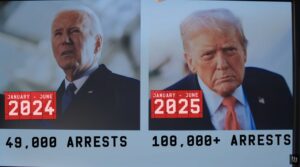
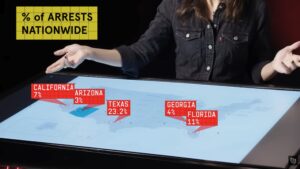
Immigration enforcement has become a dominant theme of the second Trump administration. Since January 2025, Immigration & Customs Enforcement (ICE) has arrested over 100,000 people—doubling the pace of the final year of Joe Biden’s presidency. WIRED reporter Vittoria Elliott tracked where the most migrants are being arrested, where exactly ICE is taking them, and where they’re deported to. This is Immigration & Customs Enforcement, On The Grid.
ICE agents threatened a car with Sky News Reporter Martha Kelner inside, as she reported on mounting tensions following recent ICE-related shootings in Minneapolis.
We were in the land of the free just a couple of weeks ago speaking to the American public about their dear leader. Apart from a couple of outliers, the people of Kansas didn’t seem too happy with President Trump.
After Mark Ruffalo had a pop at Donald Trump at last night’s Golden Globes ceremony, feast your eyes on the rest of the times the leader of the free world caught some strays from the red carpet.
We’re learning more about what it takes to become an ICE officer, Greenland’s diplomatic delegation needed a smoke break after meeting with Vance and Rubio, and the parties at Mar-a-Lago keep getting weirder.
David Guttenfelder, a visual journalist for The New York Times, was at the scene in Minneapolis immediately after an ICE agent killed Renee Good, a 37-year-old woman, in her vehicle. He walks us through the photos and videos he took over the next few days as outrage and protests mounted in the city. Here’s what to know about the shooting: https://nyti.ms/3YVRs1f Subscribe: http://bit.ly/U8Ys7n More from The New York Times Video: http://nytimes.com/video
Our visual journalists David Guttenfelder and Todd Heisler describe a dramatic incident in which federal agents dragged a woman out of her car in Minneapolis near where Renee Nicole Good had been killed days before. By David Guttenfelder, Todd Heisler, Christina Shaman, Sutton Raphael, Laura Salaberry, Coleman Lowndes and Thomas Vollkommer Read more about the confrontations in Minneapolis: https://nyti.ms/4sDkgsT Subscribe: http://bit.ly/U8Ys7n More from The New York Times Video: http://nytimes.com/video
Trump’s propaganda machine wants you to believe the killing of Renee Nicole Good wasn’t a senseless and predictable crime committed by our government, artificial intelligence is creeping into the health care system in dubious ways, and a $5,000 smart toilet that can call for help is the best new gadget of the year.